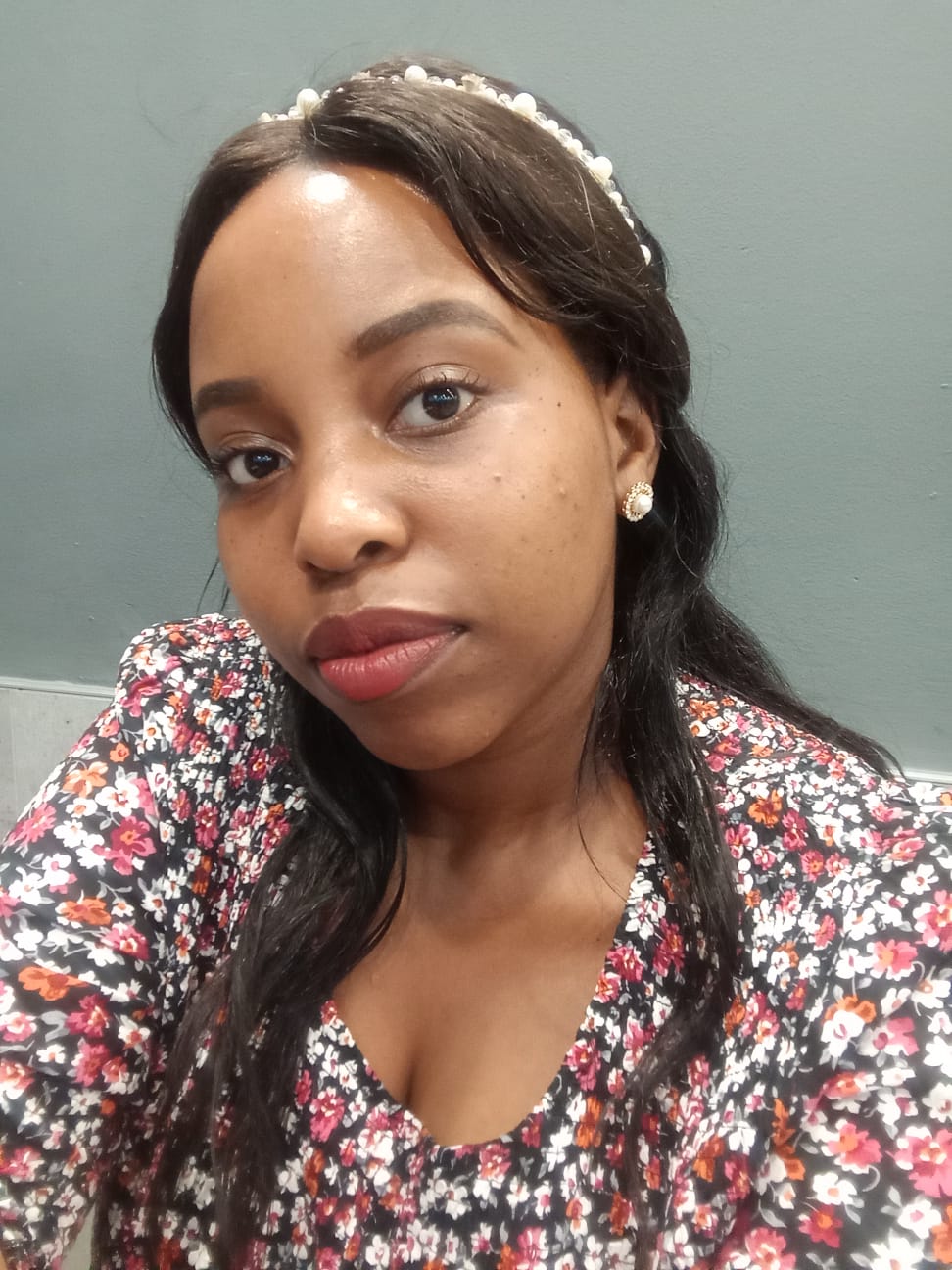
There are stories we inherit, stories we discover, and then there are the stories we realise are still waiting to be told. For Onthatile Present, becoming an author began, in many ways, with being a reader.
As she immersed herself in fiction, she journeyed through the works of international authors, becoming fascinated by the worlds they created and the intentionality behind their stories, but the more she read, the more she began to notice something that there were relatively few African stories among the books that filled her reading world.
It was a gap that stayed with her. She began thinking about the wealth of stories, experiences and wisdom that existed within African communities, stories that deserved to be written, read and shared. Then, in her reading pursuits, she encountered African authors. She was struck by their prowess in storytelling.
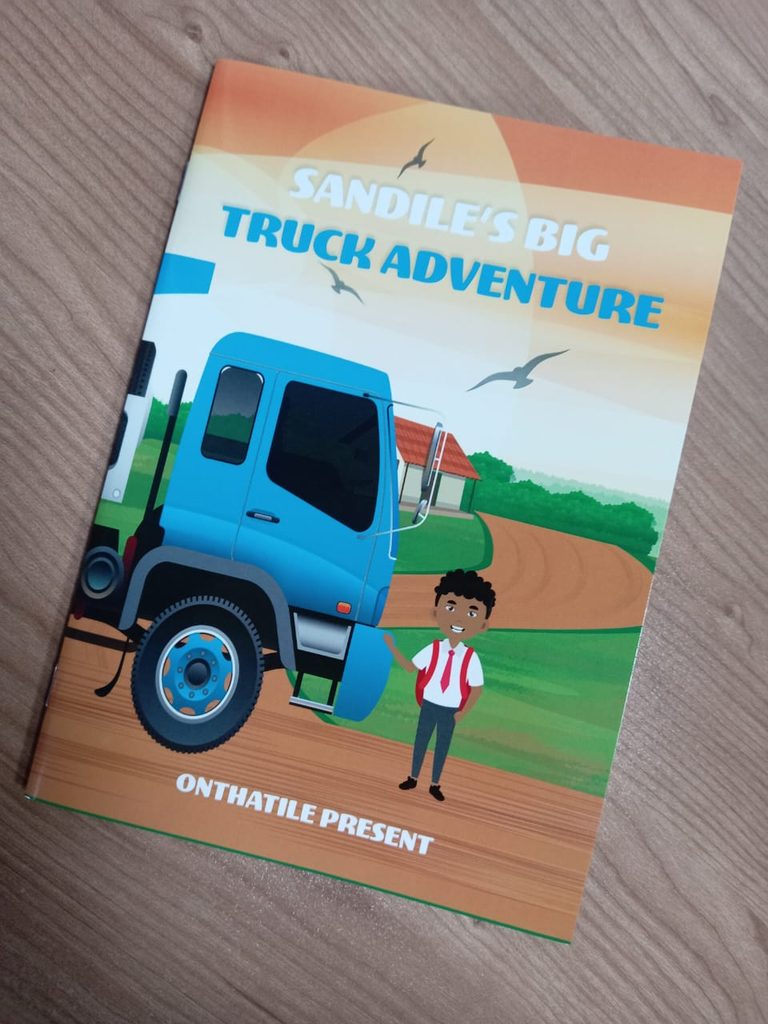
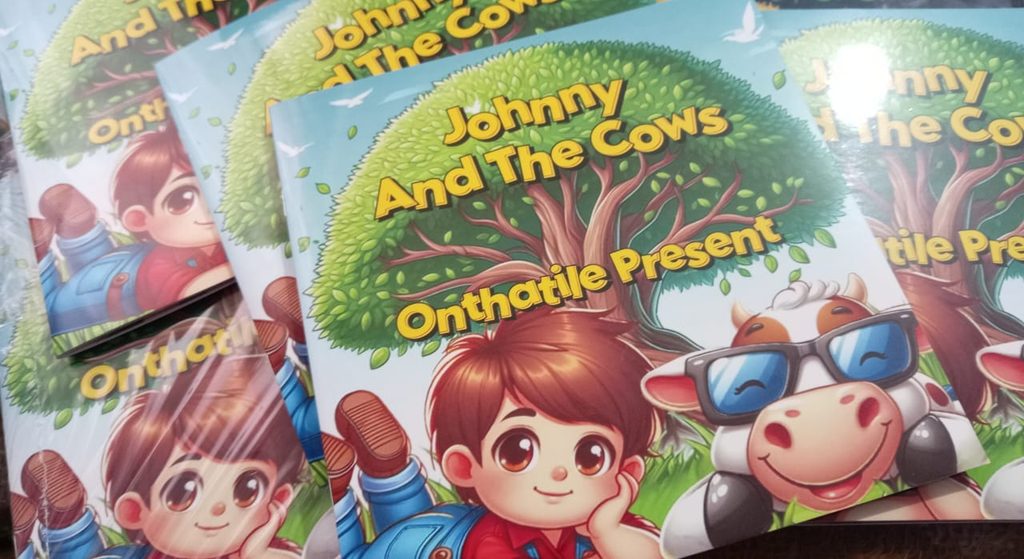
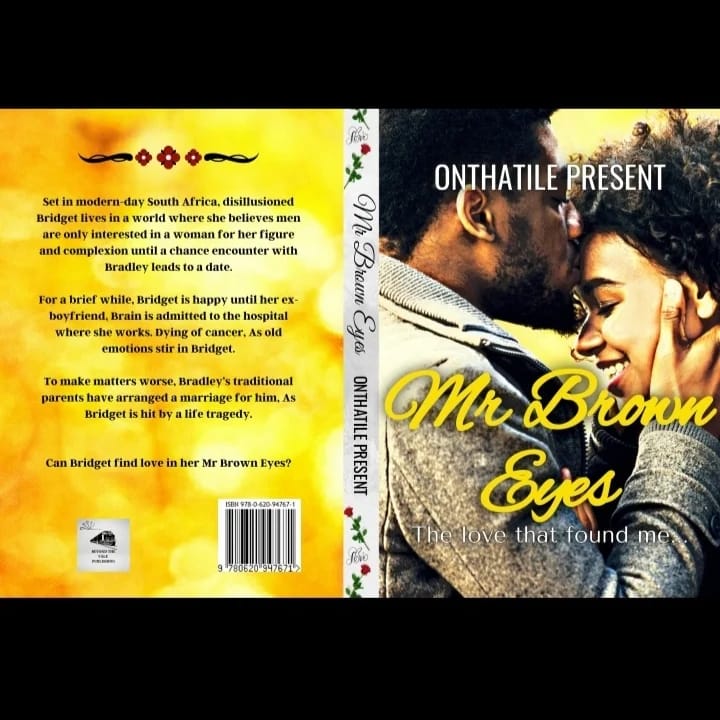
“I was intrigued by how the stories were told and got inspired to challenge myself to write,” she says. That moment became a turning point. What had begun as a reader’s observation of what was missing became a personal invitation for her to contribute to the literary landscape. Today, that journey has produced three books: Mr Brown Eyes, The Love That Found Me, a fiction-drama work for adult readers, and two children’s books; Johnny & the Cows and Sandile’s Big Truck Adventure.
When the Story Becomes Real
Her first book, Mr Brown Eyes, The Love That Found Me, remains particularly memorable, not only because it was her introduction to published authorship, but because she genuinely enjoyed writing it. “I found myself laughing while writing certain parts of the book, particularly as I explored relationships and the ways women sometimes play hard to get when pursued by men, you know how it is,” she says with a chuckle. Even the title came naturally from the story. The person she was writing about had brown eyes, and Onthatile wanted a catchy title that connected to the character. Mr Brown Eyes simply made sense.
Seeing the Gaps
The more book fairs she attended, the more she realised that the gaps extended beyond adult literature. Her growing interest in children’s literature prompted a deeper exploration of how to write age-appropriate stories that educate without underestimating young readers.
A child and an adult do not approach a story with the same level of understanding, and Onthatile believes writers therefore need to think carefully about their language and the messages they place in children’s books. A detail that might appear insignificant to an adult can have a much greater impact on a child. “Writing for children means respecting their intelligence while remaining conscious of their developmental stage”, she offers. That philosophy can be seen in the intentions behind her children’s books.
Johnny and the Cows brings fun into learning, allowing education and entertainment to meet within the story. Sandile’s Big Truck Adventure, meanwhile, carries an important lesson about communication and accountability. “It’s particularly about the importance of telling your parents where you are going and with whom,” she explains. It is a simple message, but an important one when it comes to children’s safety. She describes both books as stories built around themes including curiosity, family and safety, with the intention of imparting valuable life lessons. They are also suited to story time and educational discussions.
This is perhaps where her different experiences as a reader and writer converge: she understands that a story can entertain while still carrying something meaningful beneath the surface. That openness to learning is a thread that runs through Onthatile’s life beyond writing. She is a recent graduate who has completed four qualifications, including a Higher Certificate in Office Administration, a Higher Certificate in Marketing, a Bachelor of Business Administration specialising in Supply Chain Management, and an Honours Degree in Business Administration specialising in Logistics Management. She has also completed additional training through programmes including YES4Youth and Future Performance, with one of her qualifications earning her a Top Achiever Award.
Onthatile’s relationship with books has also moved beyond her own writing. . She has also donated books to schools to support learners with reading. Recently, she established the Onthathile Book Foundation, which promotes literacy and donates books to orphanages, and plans to assist underprivileged schools with children’s books.
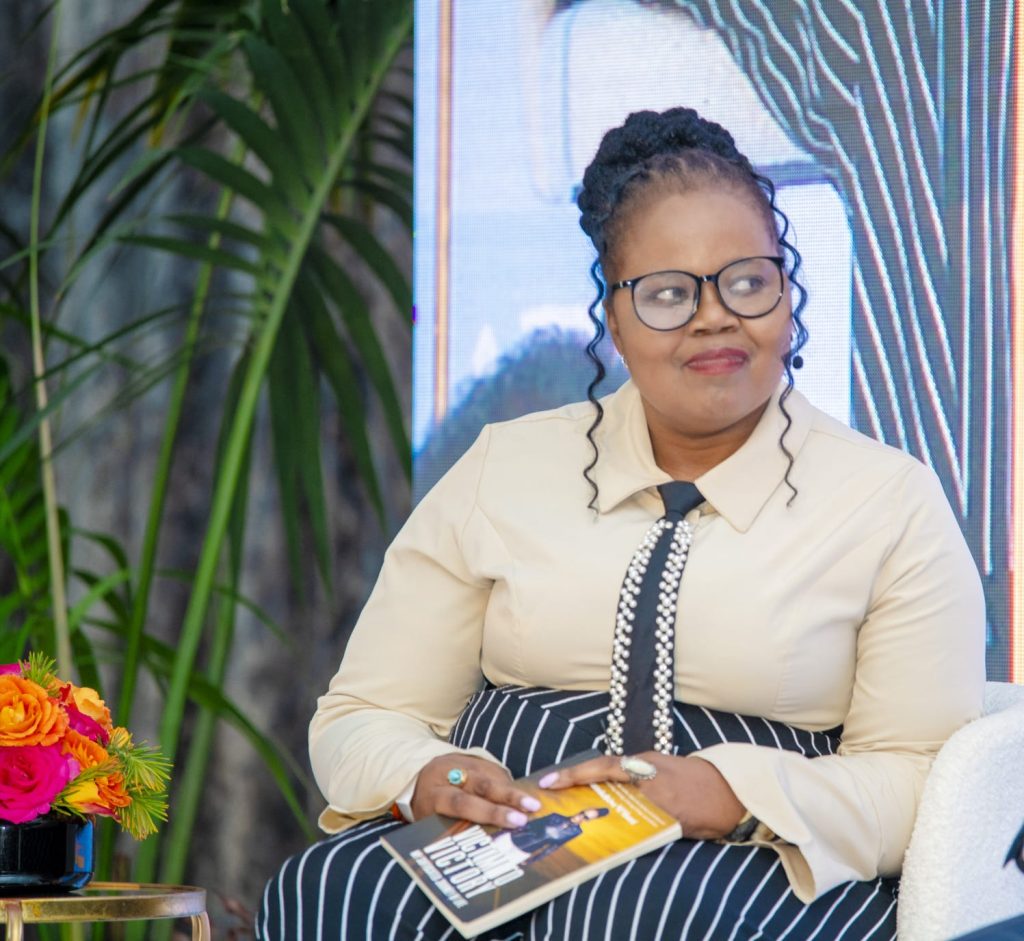
For Makhosazane ‘Makhosi’ Mbonambi, writing did not begin with a career plan carefully mapped out in advance. It began in childhood, as a primary school pupil writing plays for her school and church. However, the writer she has since become was shaped by something else entirely: a life marked by adversity, resilience and a persistent search for something that felt truly her own.
Her journey to becoming a published author took her back to her early marriage and divorce, single motherhood, a demanding corporate career, and a period of profound emotional distress. Yet through each chapter, one thing remained constant: her resolve to keep moving forward was strengthened.
A childhood passion put on hold
Writing was something Makhosi naturally gravitated towards from a young age, but it was not a career her mother considered practical at the time. Like many parents of her generation, her mother wanted her to prioritise education and build a secure professional future.
“There was limited support for young creatives, unlike today, and education was understandably placed ahead of artistic ambitions,” she says of growing up in the 1980s and 1990s.
Makhosi listened. Over the years, the desire to write never disappeared, surfacing in attempts to write for television and entries in a scriptwriting competition, but it remained largely a personal passion, set aside while she built her life and her career.
An early marriage, and its unravelling
At one point in her life, Makhosi was a stay-at-home mother, after she and her then-partner had agreed that she would focus on raising their son while he provided for the family. She was young, and looking back, she believes getting married so early made it harder to recognise some of the warning signs.
There was resentment from her in-laws, particularly towards the life and care their brother provided for her and her son. The hostility became increasingly difficult to navigate, with insults and interference eventually contributing to the breakdown of her marriage.
Circumstances changed, leaving Makhosi unemployed and having to rebuild her life while caring for her seven-year-old son. After losing their home and facing the possibility of homelessness, she made her son a promise, the same promise that would, years later, give her memoir its title.
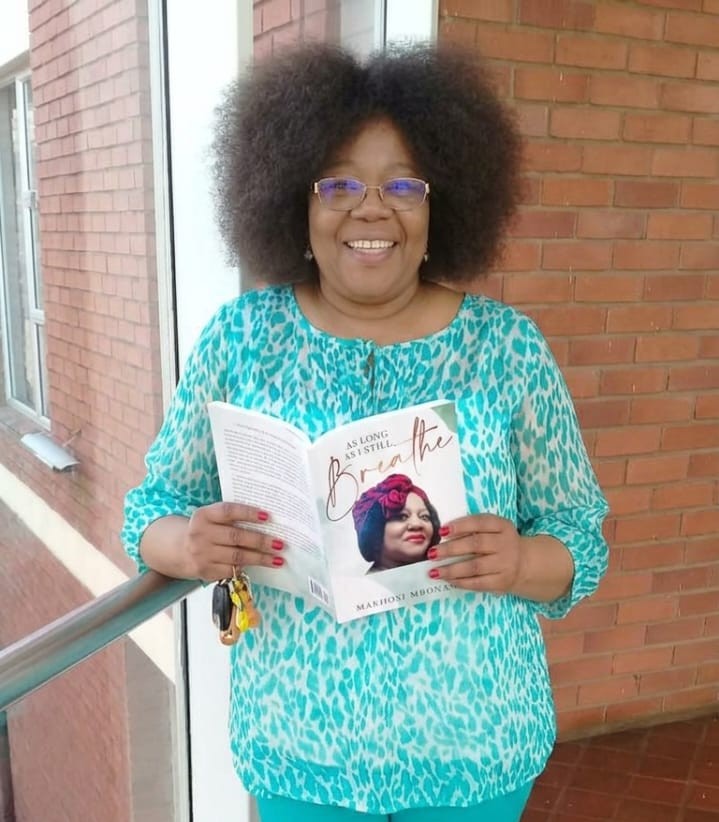
“As long as I still breathe, I will take care of you. As long as I still breathe, I will make sure your childhood is happy and wonderful. I will make sure you get an education, have a stable home, are clothed and never go hungry. I will fully support you and your dreams. As long as I still breathe, I will always be your shoulder to cry on. I will always love you unconditionally.”
For Makhosi, these were not simply words of reassurance to a child; they became a commitment she would spend the years that followed fulfilling, and the starting point for rebuilding her life, finding employment, and creating the stability she had promised her son.
A morning that changed everything
While living with her mother during this period of rebuilding, Makhosi followed the familiar routine of waking at 5:00 a.m. to prepare her son for school. It was his first time using the school transport.
One morning, her mother noticed an unusual silence and went into the room where Makhosi and her son were sleeping. She found her grandson awake, lying quietly on his mother’s chest. He had tried to wake her, but she was completely unresponsive. Rather than leaving her side to seek help, he stayed exactly where he was, lying on her chest, as though staying close, as though holding on, might be enough to keep her breathing.
Her mother immediately called Makhosi’s sisters, who rushed her to get medical help. When she regained consciousness, she was disoriented, in severe pain and unable to move her arms or legs. The incident left lasting effects; her left leg remained swollen and extremely painful, and she continues to live with the pain today.
These experiences form part of the woman behind the writer, but they do not define her.
Rebuilding
Finding employment was part of rebuilding her life, even when the work itself was not what she had imagined for herself. There were moments when she had to put personal preference aside and choose what would provide for her son; taking a job she did not enjoy as, in her words, having to “swallow that pill as bitter as it was.”
Her first position was as a secretary, a role she approached with determination, willingly taking on unpaid overtime and making the most of every opportunity to advance. Her ambition pushed her to further her studies, earning a Diploma in Office Administration, a B.Tech in Office Management and Technology, a Postgraduate Certificate in Business Management and a Postgraduate Diploma in Business Management, specialising in Business Ethics and Corporate Governance.
That studying opened the door to part-time lecturing while she continued working permanently as an administrative assistant. Her career progressed steadily from there, eventually leading to a promotion to Senior Committee Officer at Mangosuthu University of Technology (MUT), where she has since built more than a decade of experience in governance support.
Over time, she was able to support her son through school and ultimately through tertiary education. The seven-year-old boy at the centre of her promise has since grown up.
When the walls closed in
The professional progression was rewarding, but something was still missing. Makhosi had always been drawn to creativity, and while she could perform well within the structure and demands of an office environment, the routine gradually began to take its toll. The job that had once represented stability increasingly felt like a place where she was stuck.
Her unhappiness became difficult to ignore. It developed into anxiety, depression and severe panic attacks, particularly when she thought about having to go into the office.
Then the COVID-19 pandemic changed the rhythm of her life.
When stillness created space
Working from home gave Makhosi something she had desperately needed: space. Away from the constant demands of the office, she finally had an opportunity to reconnect with the creative side of herself, revisiting a dream she had carried since childhood.
Her son, who knew how much she had always wanted to write, encouraged her to finally put her story on paper. She began by gathering her thoughts, making notes and drawing from stories she had recorded in her diary, and carefully planned the first chapter. The title came before the manuscript.
Once she started writing, the process gathered momentum.
“One chapter quickly led to the next, and before I knew it, I had a 17-chapter manuscript,” she recalls.
The writing became an intense period of creativity. She would write for hours, sometimes throughout the night, as memories and ideas came together on the page. For someone who had wanted to write since primary school, it was a dream finally being given room to breathe, and for someone who had spent years navigating difficult experiences, storytelling offered more than a creative escape. It gave her a way to process life, make meaning from adversity, and connect with experiences that other people could recognise in their own lives.
Turning experience into a story
Writing As Long As I Breathe meant returning to memories that were not always easy to revisit. Some chapters required Makhosi to confront experiences she had spent years trying to put behind her. Yet writing allowed her to transform those experiences into something she could make sense of and, ultimately, share.
The memoir is therefore not simply a record of difficult circumstances. It is about what came afterwards: the choices, sacrifices and determination involved in rebuilding a life. Her writing allows her to explore the realities of people’s lives while reminding readers that behind every story is a human being navigating circumstances that are not always visible.
For Makhosi, the story also became an opportunity to speak to women who may recognise aspects of their own experiences in hers.
“I want to write stories about women, their experiences and things that aren’t talked about in this regard,” she says.
The nomination of As Long As I Breathe for the Book Behind Awards in the Best Inspirational Category adds another dimension to Makhosi’s journey. What began as a childhood love for writing, placed on hold while she pursued the education her mother encouraged her to prioritise, has now developed into a published memoir with a message she hopes will reach other women.
“I write to prove that no matter what obstacles life throws our way, our dreams are always worth fighting for,” she says.
Her career taught her discipline. Motherhood taught her responsibility. Adversity taught her resilience. And writing, finally, gave her a voice.
For Makhosi, finding her passion later in life is a reminder that purpose does not always arrive on schedule. Sometimes it emerges after years of searching and sometimes, the very experiences that threaten to break us become the material from which we build something new.
With As Long As I Breathe, she has taken the first major step in reclaiming the writer she has always been. Her journey is ultimately not just about becoming a writer; it is about finding the courage to listen to the creative voice that had been there all along.
LitBliss can’t wait to read more of the stories Makhosi has yet to tell, as she continues to claim her place in the literary world, and perhaps, one day, her journey will come full circle, back to where it all began, with a play of her own.
She Was Told She Would Never Amount to Anything. She Proved Them Wrong.
Rejected as a child. Given a second chance through a life-saving lung transplant. Today, author and organ donation advocate Samukelisiwe “Samke” Msomi is transforming her pain into purpose, ensuring that her story becomes a source of hope for others.
Some stories do more than inspire; they remind us that hope can emerge from the most unimaginable circumstances.
For Samukelisiwe “Samke” Msomi, life began with rejection. Left in the care of her grandmother shortly after birth, she grew up believing the woman raising her was her mother. It was only later that she discovered the painful truth: her biological mother had abandoned her and never truly accepted her.
Throughout her childhood, Samke endured words that no child should ever hear. She was told she was ugly, useless, stupid, a failure; someone who would never amount to anything. Those words shaped her self-belief for years, but they did not determine her destiny.
Raised in rural KwaZulu-Natal by a grandmother who worked tirelessly to keep her alive, Samke witnessed extraordinary sacrifice. Her grandmother sold chickens, chopped and sold firewood, ploughed other people’s fields and took on any work she could find to provide for her family. As circumstances changed, Samke moved between different households until the kindness of the Zondi and Xulu families gave her something she had longed for: a place to call home.
Despite overwhelming hardship, she completed Grade 12 at Mdlangaswa High School in 2001. Yet another challenge lay ahead. Her identity document and matric certificate were withheld from her for years, making it almost impossible to pursue further opportunities.
Still, she refused to surrender.
While working at KFC to build a future, Samke continued studying and eventually discovered her passion for healthcare. While involved in research linked to the University of KwaZulu-Natal, she developed a keen interest in medicine and later qualified as a Pharmacist Assistant. She volunteered at Church of Scotland Hospital in Tugela Ferry, secured permanent employment in 2012 and graduated in 2015.
Her perseverance transformed her circumstances. She built her own home, bought her own car and achieved many of the milestones she had once believed were beyond her reach.
Then, just as life seemed to be falling into place, everything changed.
A Breath Away from Losing Everything
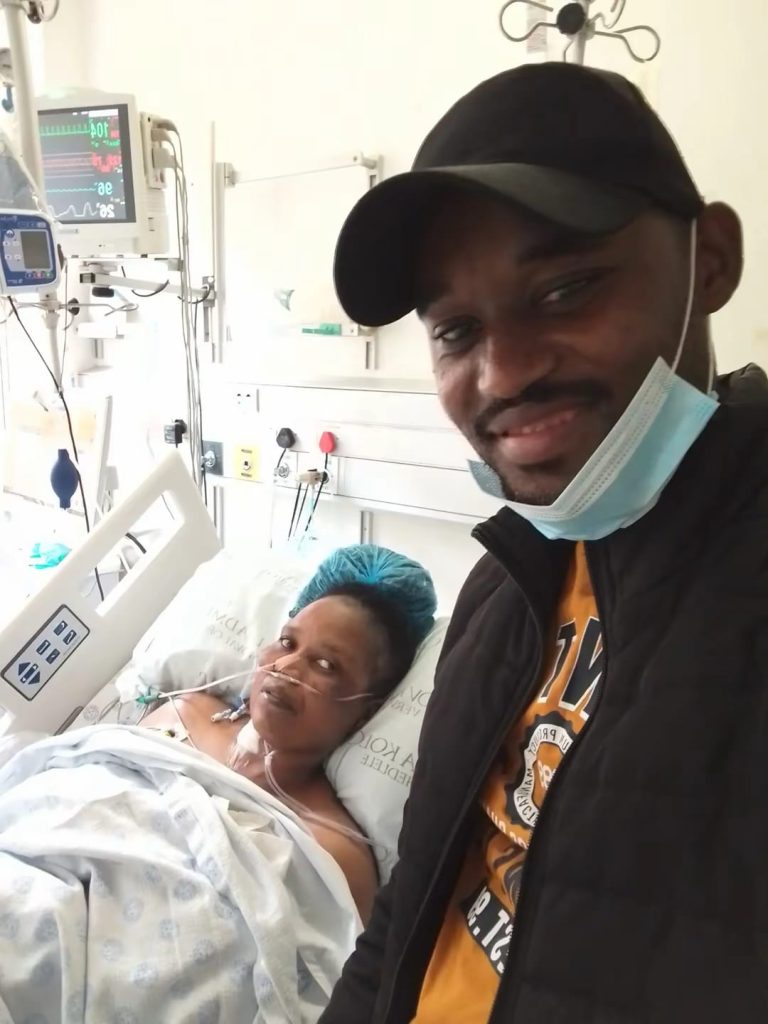
Samke during her recovery at Groote Schuur Hospital with her “ride or die”, Sduduzo Yeni, her partner and steadfast companion throughout her journey.
In 2019, Samke was diagnosed with Chronic Obstructive Pulmonary Disease (COPD), a progressive lung disease that slowly robbed her of something most people take for granted: the ability to breathe.
The woman who had spent her life overcoming emotional hardship was suddenly fighting for her life physically.
Treatment options were limited in KwaZulu-Natal, forcing her to relocate to the Western Cape in search of specialised care. She endured repeated hospital admissions, contracted COVID-19 during one of her hospital stays and eventually found herself on the national waiting list for a lung transplant.
After five months of waiting, her miracle arrived.
Just after midnight on 6 June 2024, doctors from Groote Schuur Hospital called with life-changing news: a potential donor had been found. The transplant was successful.
Although her recovery has been long and challenging, including months in intensive care and further surgeries, Samke regards that day as the beginning of her second chance at life. “I decided not to take this miracle with me to the grave,” she says
From Victim to Victory
Rather than keeping her experience to herself, Samke chose to transform her journey into a message of hope.
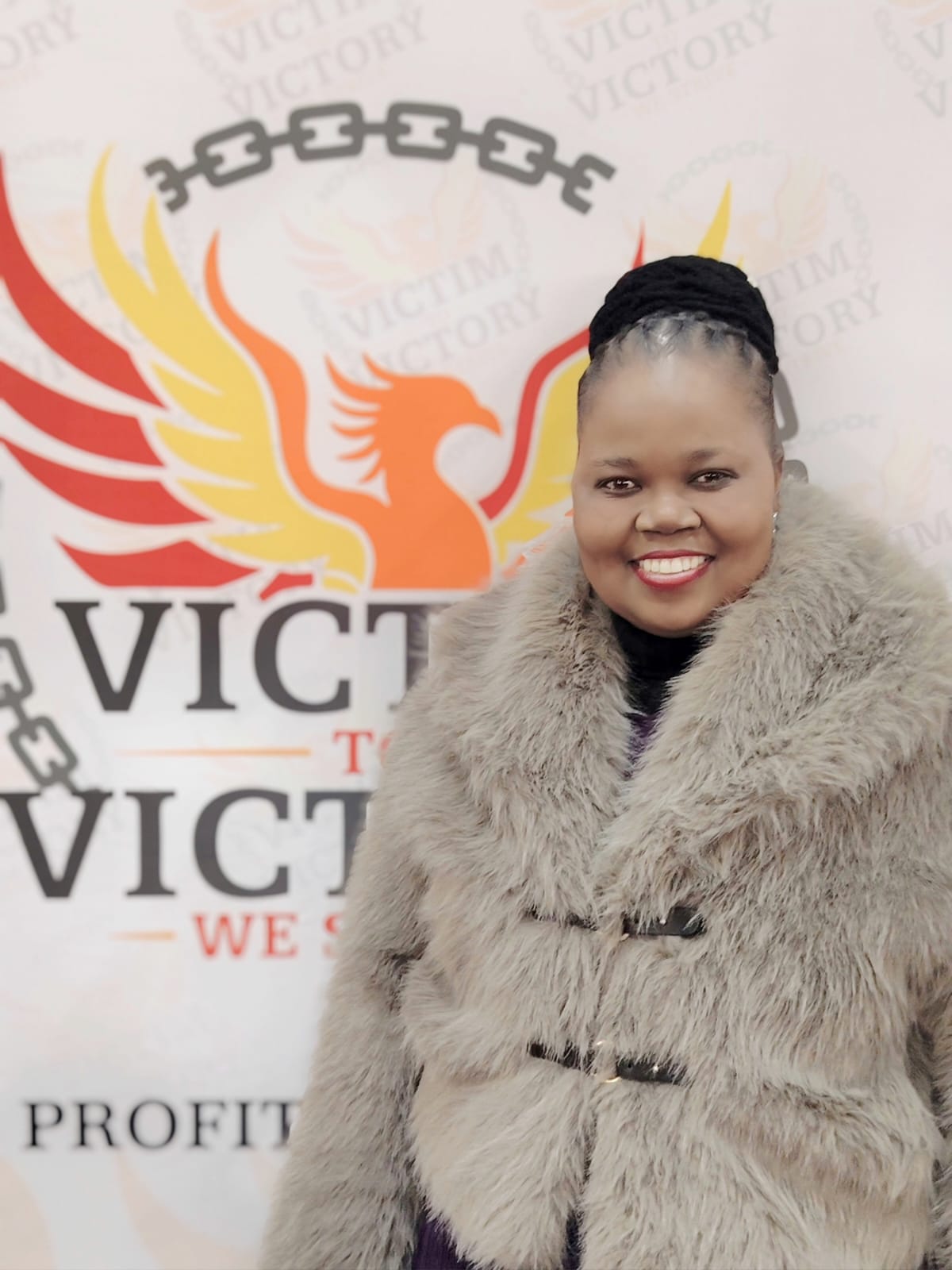
Her memoir, Victim to Victory: My Suffocated Journey of Life, chronicles her remarkable journey from childhood rejection to surviving a life-saving lung transplant. More than an autobiography, it is a testimony of resilience, faith and perseverance.
Yet, looking back on everything she has survived, Samke believes there was something deeper sustaining her all along.
“I wouldn’t be where I am today if it were not for God. To Him be the glory. When I was younger, I thought I survived through sheer self-determination, but I realise now that I had faith all along. I just couldn’t articulate that it was faith in the Lord at that time.”
The book has already begun making an impact. It has been nominated in KwaZulu-Natal for both Best Awareness Book and Best Author, while eThekwini Municipality Libraries selected it for the 2026 Grade 7 Learners’ Book Quiz Programme, introducing her inspiring story to young readers across the province.
Turning Survival into Service
For Samke, surviving a lung transplant came with a responsibility.
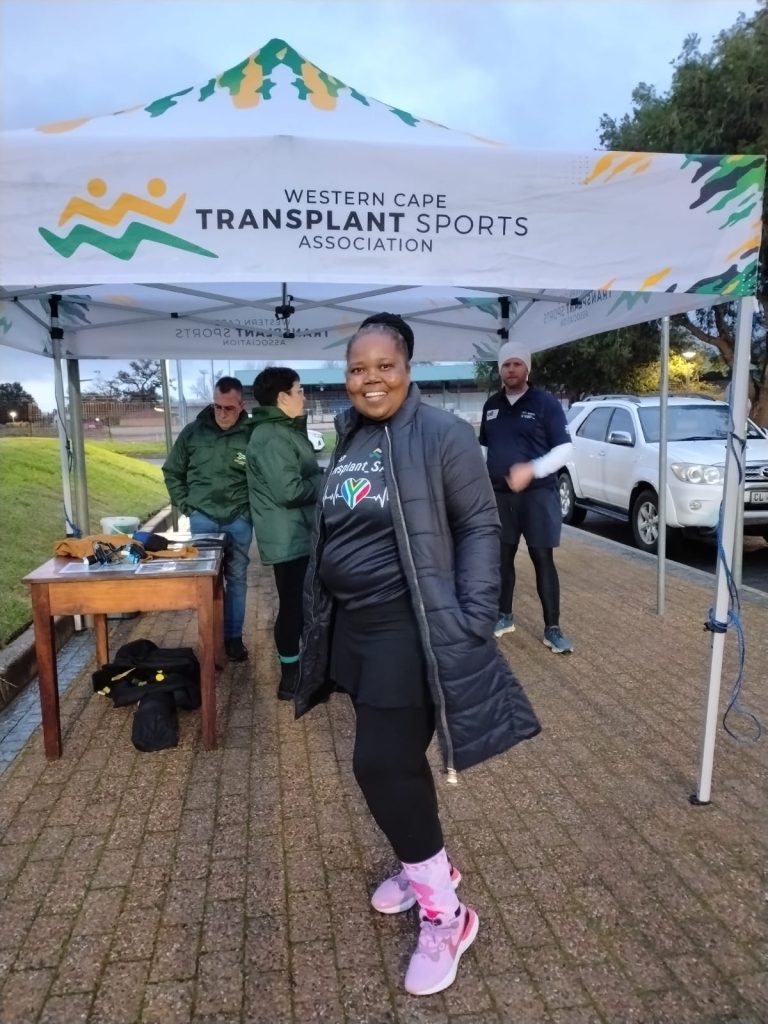
In 2025, she founded the Victim to Victory Non-Profit Organisation, dedicated to raising awareness about organ donation and supporting transplant patients and their families.
The organisation educates communities about the importance of organ donation while providing emotional support and practical encouragement to people living with organ failure. It also seeks to assist families navigating the complex and often overwhelming transplant journey.
Samke is particularly passionate about creating awareness for children born with failing organs, many of whom depend on organ transplants to survive.
“Organ failure doesn’t only affect a person’s physical health,” she explains. “It affects them mentally, emotionally and spiritually. Patients and their families need support every step of the way.”
She also recognises that increasing organ donation requires difficult conversations about culture, faith and deeply held beliefs.
“I want to engage with leaders from different faith communities about the importance of organ donation. I believe we need to have open conversations about the beliefs and concerns surrounding donation and explore how we can work together to save more lives.”
Her long-term vision reaches beyond awareness campaigns.
She dreams of seeing KwaZulu-Natal become South Africa’s third province equipped to perform lung transplants, complete with a specialised intensive care unit. She also hopes medical institutions in the province will expand specialist training so that future patients will not have to leave their families and communities to receive life-saving treatment elsewhere.
As a newly established organisation, Victim to Victory NPO is operating with limited resources. Much of its work is currently funded from Samke’s own pocket, despite her still recovering from her transplant and being unemployed for several years.
Yet she remains unwavering in her mission.
Her own life stands as powerful evidence of what one organ donor’s selfless gift can mean.
A Legacy of Hope
Samke Msomi’s story is ultimately about far more than surviving hardship.
It is about choosing purpose over pain, courage over despair and hope over hopelessness.
From a little girl who was repeatedly told she would never amount to anything, she became a healthcare professional, a homeowner, an author, a founder of a non-profit organisation and an advocate for organ donation.
Her journey proves that even when life takes your breath away in the most painful way, hope can breathe life back into your dreams.
Through her book, her advocacy and the Victim to Victory Non-Profit Organisation, Samke is ensuring that her second chance becomes someone else’s first.
Sometimes the greatest victories are born from the deepest wounds.
And sometimes, one selfless decision to become an organ donor can give another human being the chance to write an entirely new ending to their story.
Connect with Samukelisiwe “Samke” Msomi
Readers who would like to learn more about Samke’s journey, purchase a copy of Victim to Victory: My Suffocated Journey of Life, support the Victim to Victory Non-Profit Organisation, or follow her advocacy for organ donation can connect with her on social media:
Facebook: Samkeh Msomi
TikTok: @Mathimbilizana6
Instagram: @msomisamkeh
For book orders, partnership opportunities or to support the work of Victim to Victory NPO, readers can also contact Samke directly on 0661894865.
How Hlavutelo Ngobeni’s art transforms African women into living vessels of culture
What does a woman carry? The obvious answers come easily. She carries children on her back. She carries water from the river. She carries groceries home after a long day’s work. She carries families through seasons of joy and hardship.
However, there are other things women carry that cannot be weighed. They carry memory, language, tradition, and stories that survive long after those who first told them are gone. It is these invisible burdens and extraordinary gifts that South African visual artist Hlavutelo Ngobeni invites us to see.
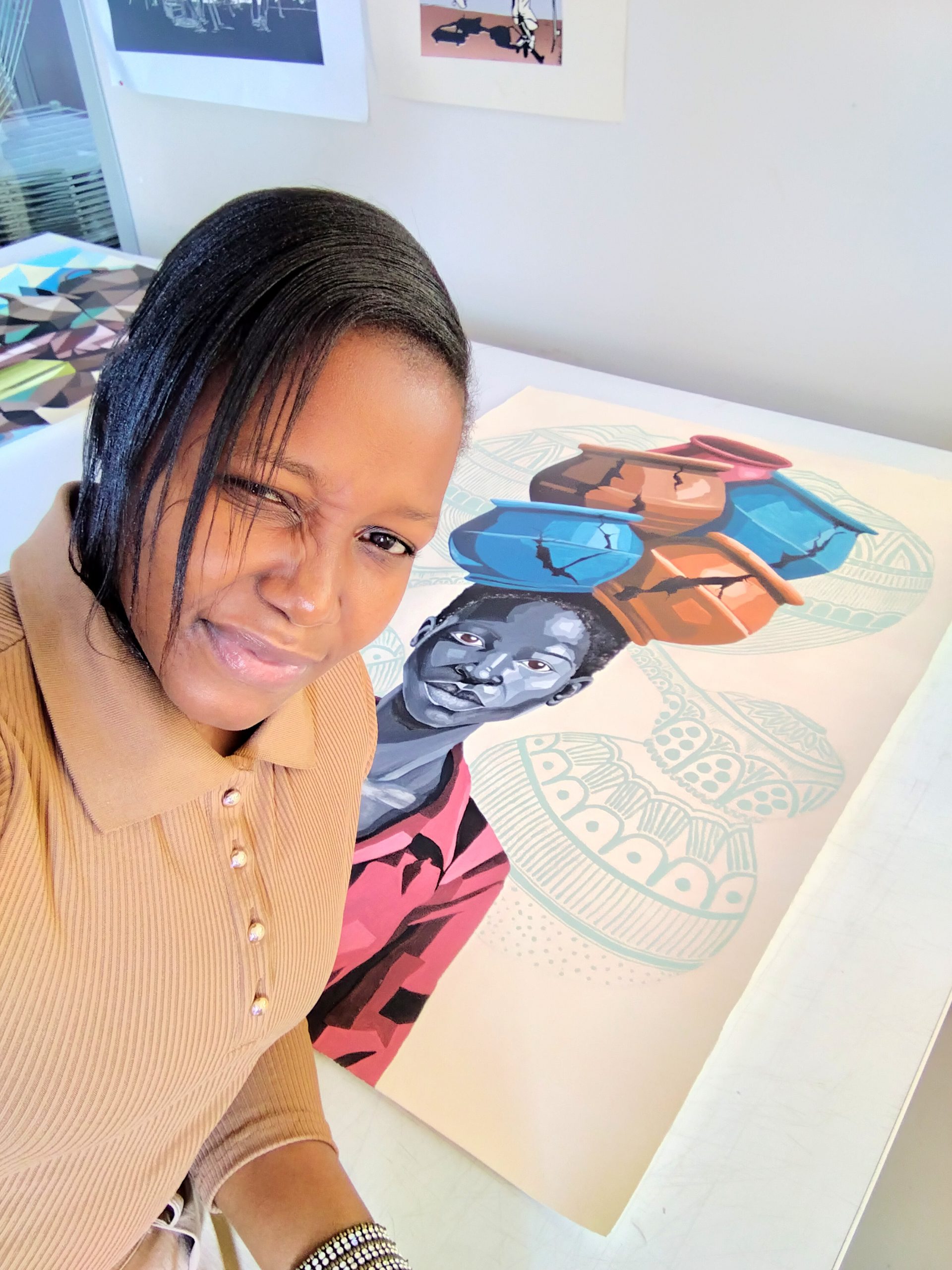
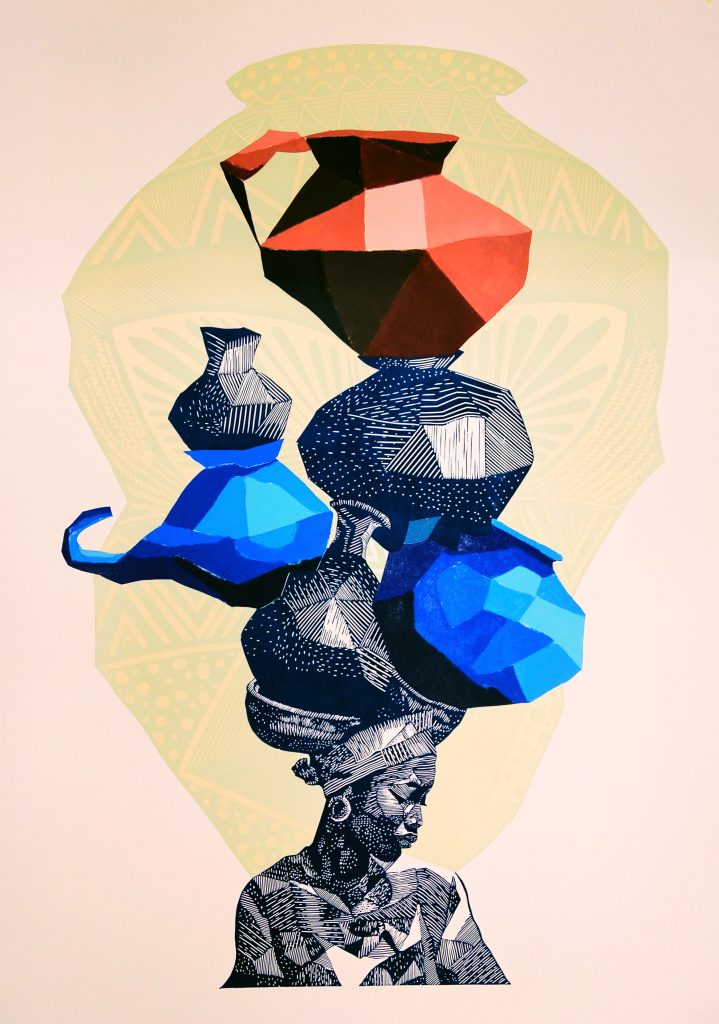
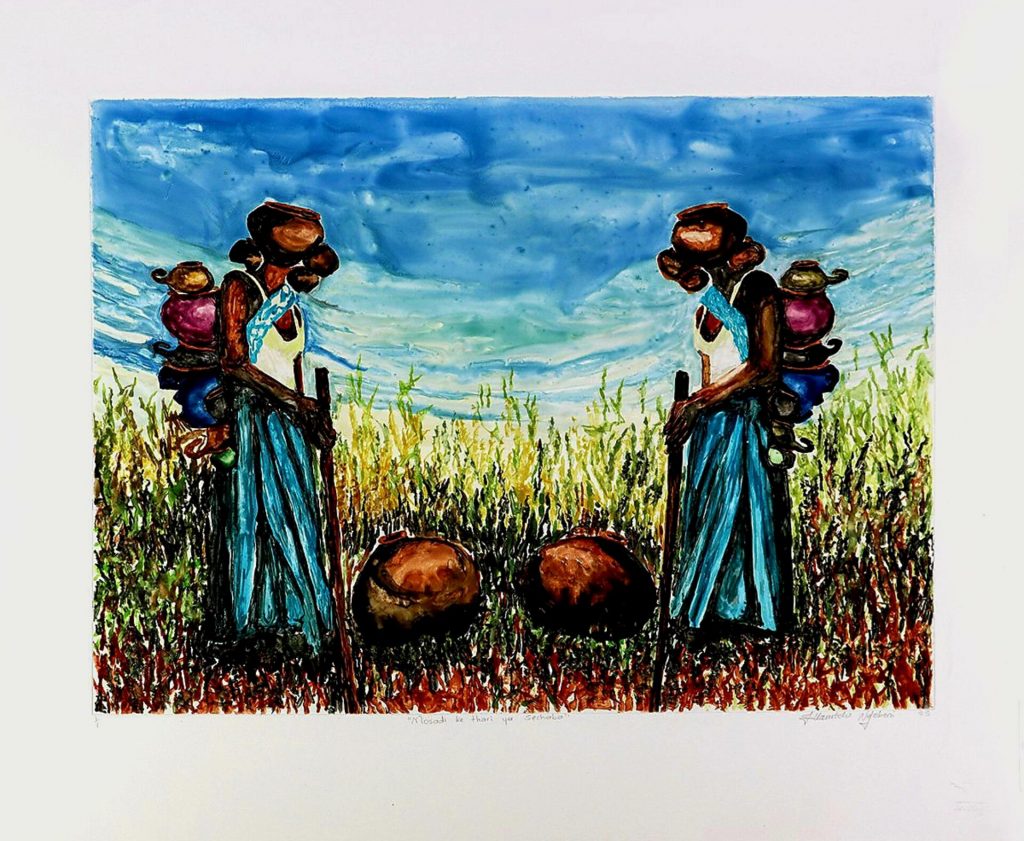
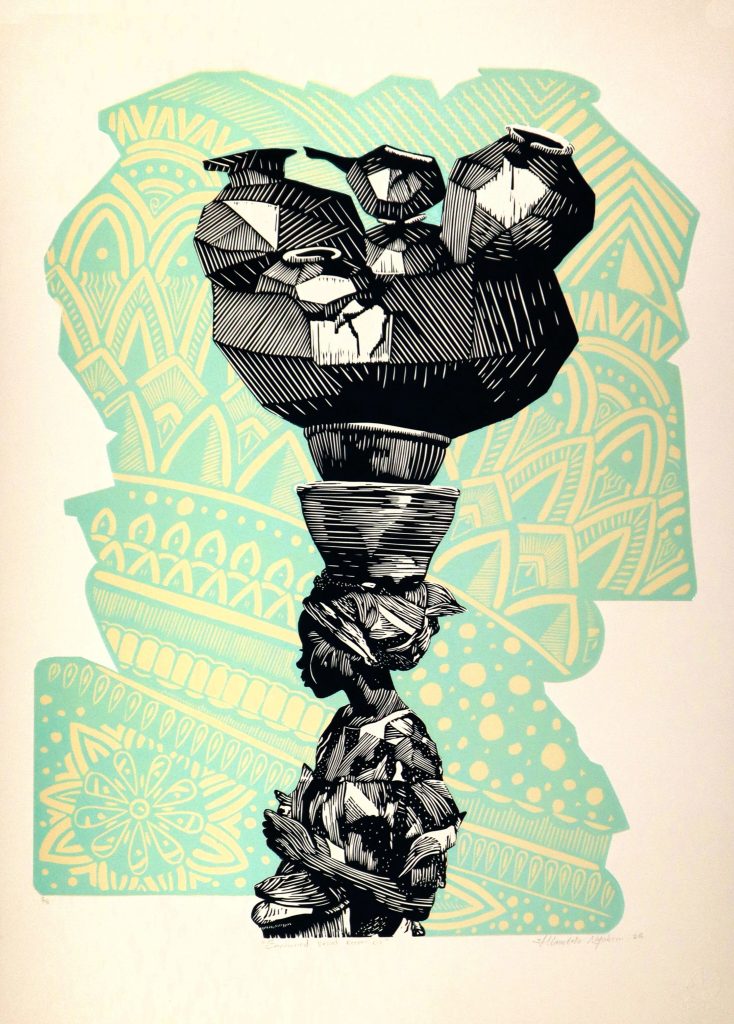
In her paintings and prints, women often appear carrying clay pots balanced effortlessly on their heads; a familiar image woven into the cultural fabric of many African communities. Look closely, though, and something unusual begins to happen. In some works, the clay pot no longer rests on the woman’s head. It becomes her head. It is a striking image, one that invites curiosity before revealing its meaning; and for Ngobeni, it’s no artistic accident.
Life is Resilient
“Replacing a woman’s head with clay pots resembles her role. Her mind, her entire being, is shaped by what she carries. The woman literally becomes the vessel of culture.”
With those words, the paintings become something much larger than portraits. They become a meditation on African womanhood. The vessel is not balanced upon these women; it has become part of who they are.
Long before her work travelled to prestigious art fairs, Hlavutelo Ngobeni was a little girl growing up in Thomo Village, Limpopo. While other children spent their lunch breaks playing, she spent hers drawing. Even then, art was more than a pastime; it was the language through which she made sense of the world.
Her teachers recognised her talent and encouraged her to pursue it seriously. At Hanyani Thomo High School, she chose art as a subject, becoming the only girl in her class. Rather than discouraging her, the pressure strengthened her resolve.
That foundation was reinforced at Artist Proof Studio in Johannesburg, where she specialised in printmaking and, for the first time, found herself surrounded by women artists.
“It changed everything,” she recalls. “For the first time, I felt seen, comfortable and challenged in a different way.”
Yet the roots of her artistic language reach deeper than any studio; they begin with her grandmother. Raised in a Xitsonga household, Ngobeni watched her grandmother shape clay into vessels that were both practical and sacred. Those pots carried water and grain, but they also carried stories, customs, and ways of living passed from one generation to the next. That memory continues to shape every piece she creates.
“The focus of my work is primarily women and clay pots because, to me, they embody dignity and heritage in motion,” she says. “Traditionally, the act of balancing pots on the head is more than domestic labour; it is a disciplined art passed down from mothers to daughters. It signifies strength, balance, responsibility and care.”
That discipline has never really left African women; it has only changed shape. The woman who once balanced a clay pot on her head now balances a career, a household, a child on her hip and a deadline on her phone. She is still practising the same art: carrying more than her body should reasonably hold, without spilling or breaking stride.
Basadi ba rwele setshaba
Ngobeni’s work makes that lineage visible. The modern African woman juggling boardrooms and bedtime stories is not a new invention; she is an old tradition wearing a new outfit. The vessel has simply expanded to hold a laptop where it once held water. Perhaps that is why her paintings feel so familiar, even to viewers from cultures beyond her own.
Whether Tsonga, Zulu, Xhosa, Venda or countless other African communities, women have long been the custodians of traditions that are rarely written down; preserved through language, rituals, craftsmanship and the quiet lessons shared between generations.
Ngobeni honours African women not by placing them on pedestals, but by recognising what they have always carried. In her work, even cracked clay pots remain upright. They bear the marks of time without collapsing.
Empowered Vessel Keeper (1)
“The cracked pots remain upright in my work, reflecting how pressure and history mark us, but do not break us. The clay pot carries water and grain, but symbolically it holds culture, memory, and survival itself. By painting women in the act of carrying, I honour them as custodians of heritage, figures who bear the weight of tradition with grace and resilience.”
Today, Ngobeni’s work has travelled far beyond the village where she first picked up a pencil. Her prints and paintings have been exhibited at the Investec Cape Town Art Fair, the FNB Art Fair, Turbine Art Fair, and the Absa Exhibition, as well as internationally in China and the United States.
She continues to work at Artist Proof Studio while facilitating handmade paper workshops through Phumani Paper Mill at the University of Johannesburg. Yet no matter how far her work travels, its message remains rooted in home.
For more on Hlavutelo’s work, visit our Artistry Alchove page.
How the oral storytelling tradition shaped Busisiwe Ngwenya’s craft
There is a strange expectation we often place on writers. We imagine them as people overflowing with words; charismatic storytellers who effortlessly dominate every conversation. After all, how could someone who fills hundreds of pages with beautiful prose not also fill every room they enter?
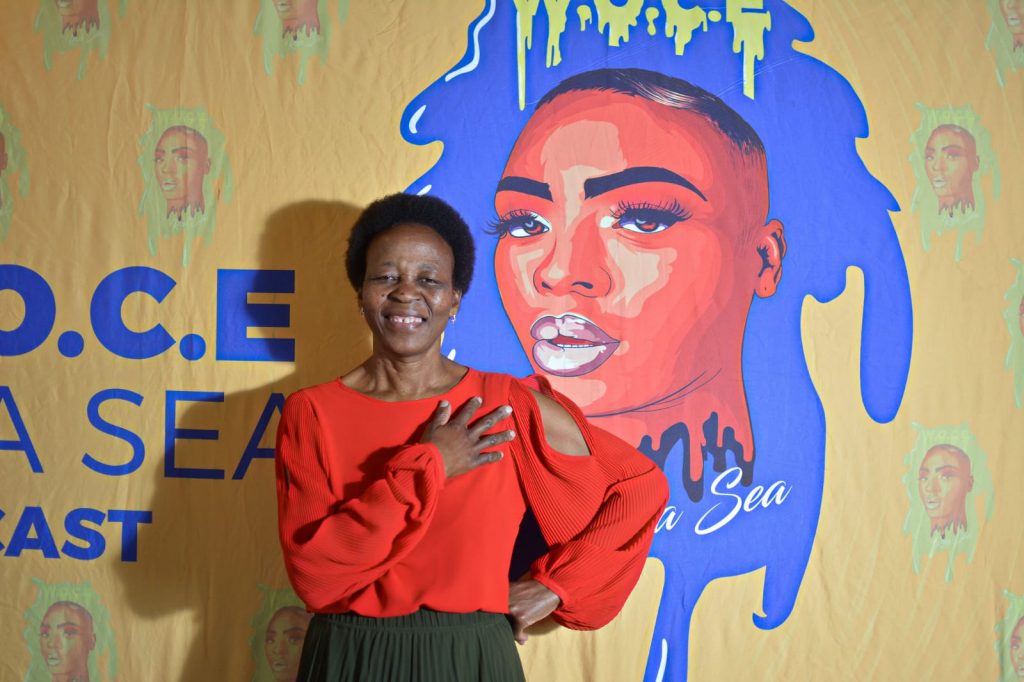
Meeting Busisiwe Ngwenya challenged that assumption. The first time we spoke was over the phone. Her voice carried confidence and authority. It was firm and commanding enough that I unconsciously began constructing an image of the person on the other end of the line. By the time we arranged to meet, I expected someone with an equally imposing physical presence.
Instead, I was greeted by a softly spoken, elegant woman whose quietness immediately drew attention. She possessed none of the loudness I had imagined, yet she somehow occupied the space completely. She listened more than she spoke, never interrupting, carefully considering every question before answering.
There was a calmness about her that lingered long after our conversation ended; a patience that felt increasingly rare in a world obsessed with being heard. Sometimes the people who speak the least leave the deepest impressions; that’s Busisiwe Ngwenya.
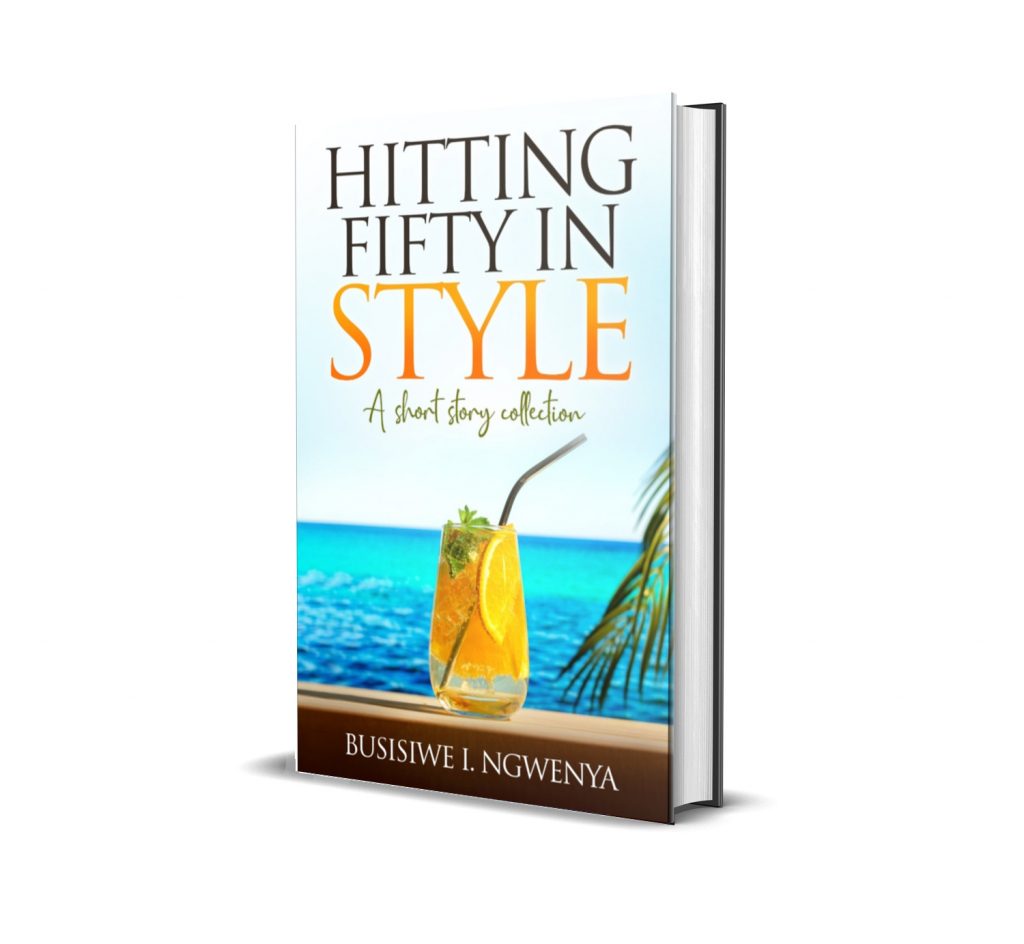
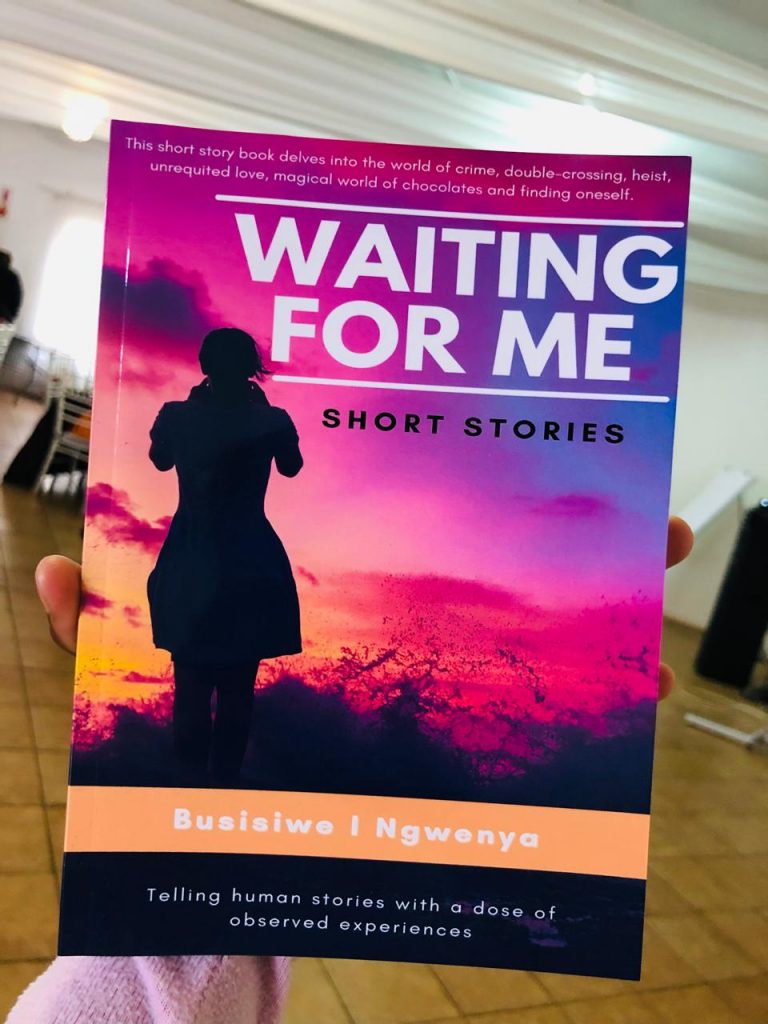
An accomplished author, speaker and B-BBEE consultant, Ngwenya has steadily built an impressive literary catalogue. She is the author of Triumph of a Deserving Person, Waiting For Me and Hitting Fifty in Style, all available on Amazon Kindle.
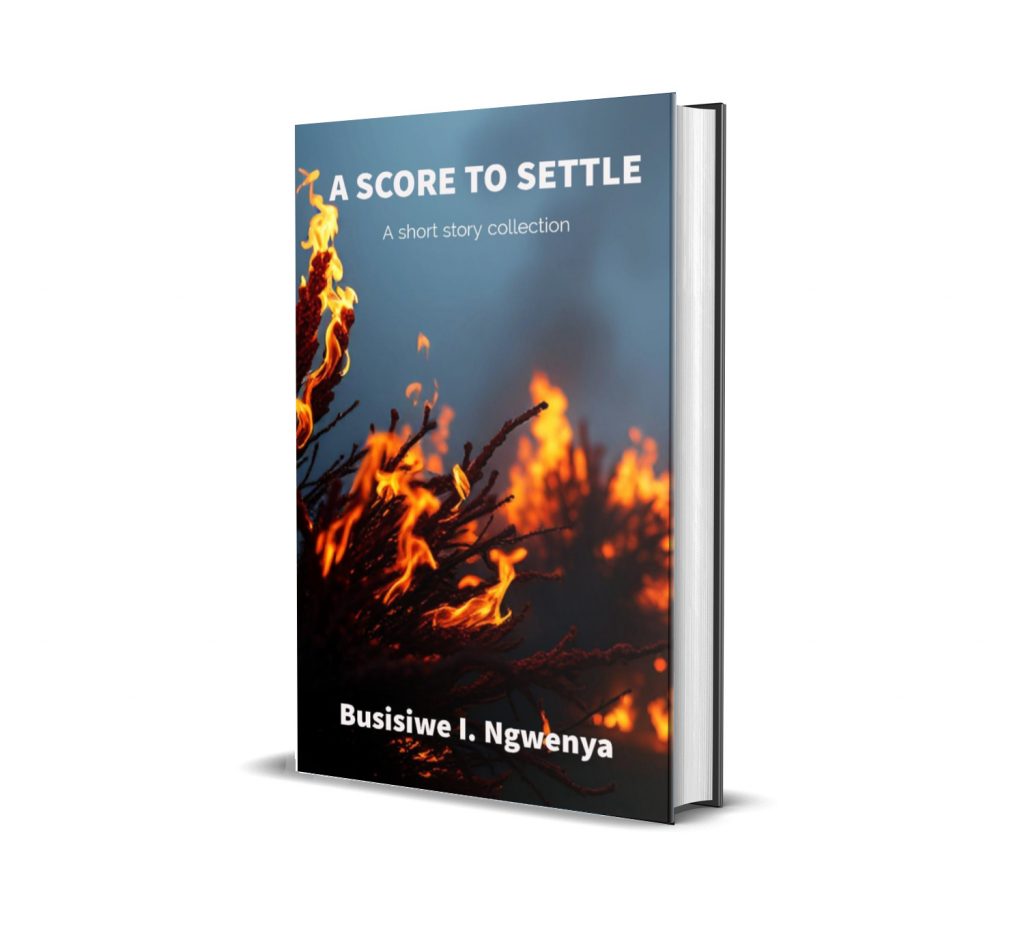
Her bibliography has since expanded to include Bound by the Womb, a collection of poetry, I Am Me, a deeply personal mini-memoir exploring life as a pastor’s child; and A Score to Settle, another collection of short stories. Her work has also appeared in several anthologies and literary publications, including Publish’d Afrika Magazine, Spoiling the Broth Anthology, Boulevard of Broken Dreams Poetry Anthology, Harmonious Melodies Poetry Anthology and the 320 Days of Sunshine Anthology.
Beyond writing, she serves on the executive committees of the Tshwane Authors Association and Gauteng LITASA, while also belonging to the ImPower’d Woman Book Club. Yet despite these accomplishments, there is no trace of self-importance about her. Instead, she speaks about writing with the humility of someone who understands that storytelling is both a calling and a craft.
Hitting Fifty In Style by Busisiwe Ngwenya
When talent first whispered
Long before Busisiwe Ngwenya ever thought of publishing books, she was captivated by stories. Growing up, she was fascinated by traditional Zulu storytelling. Before stories found their way into books, they lived in the voices of elders who gathered children to share tales rich with wisdom, humour and life lessons.
Those evenings of oral storytelling awakened something within her. They taught her that stories could preserve history, shape character, and inspire imagination.“My interest in storytelling began with listening to Zulu stories,” she recalls. “That is where it all started.”
Inspired by those stories, Ngwenya began creating her own. While she was in Grade 8 (then Standard 6), she wrote her first short story and entered it into a Drum magazine writing competition. The story centred on a pastor accused of sexually abusing a church member. Though fictional, it was inspired by true events and tackled a subject that was considered highly controversial at the time.
“It was probably too advanced for its time because these social ills were largely unheard of,” she says. “For a young woman to write about something like that was taboo.”
The story won the competition and was published in Drum. For many South Africans, Drum is more than a magazine. It has long been one of the country’s most influential cultural publications, nurturing generations of journalists and storytellers while documenting Black South African life through changing political and social landscapes.
For a young schoolgirl to see her work published there was no ordinary achievement; it was an early affirmation that her voice mattered. Along with the R200 prize money came something far more valuable: confirmation that the little girl who had once sat captivated by Zulu folktales had found the medium through which she would tell stories of her own. Ironically, writing was not her first dream.
“I actually wanted to become an actress.” She smiles as she remembers how the revelation shocked her father, a pastor. Though initially reluctant, he supported her ambitions. However, that dream was cut short after she unknowingly enrolled at what turned out to be a fly-by-night acting school. The experience reinforced his concerns about the entertainment industry. “My hopes of becoming a film star were thwarted just like that.” Her parents encouraged her to focus on her education, and for a time she stepped away from her artistic ambitions. Dancing became her creative outlet, but storytelling never truly left her.
Waiting For Me by Busisiwe Ngwenya
Gift or skill?
Ngwenya’s academic journey includes a BTech in Corporate Administration, a certificate in short story writing and an Executive Development Programme certificate. Her qualifications naturally raise an interesting question. Is writing purely a gift, or can it be taught? Her answer suggests that talent may open the door, but discipline keeps it open.
Working in corporate environments has fundamentally changed how she approaches her creative work. “It has helped me to look at my work as projects with deadlines and actually meet those deadlines,” she explains. “I’ve learned that talent alone is not enough. One requires a great deal of discipline to get a book published.”
Formal training, she says, transformed her from a naturally gifted storyteller into a technically skilled writer. “My writing is no longer naïve. It’s polished. I’m able to keep my readers in suspense through the techniques that I’ve learned.” It is a reminder that inspiration may begin the writing process, but craftsmanship sustains it.
Poetry with a purpose
One of Ngwenya’s most thought-provoking poems, Drugs Destroy Dreams, confronts the devastating impact of substance abuse while refusing to treat addiction as an isolated problem. Instead, it asks difficult questions about parenting. She believes many behavioural problems begin long before drugs enter the picture.
Sometimes, she says, parents attempt to compensate materially for what they cannot offer emotionally. In doing so, discipline is neglected. Others unknowingly burden their children with the weight of unrealised ambitions, expecting them to fulfil dreams that were never their own. “When parents live vicariously through their children,” she explains, “the pressure leaves very little room for mistakes. Children can’t simply be children.”
One line from the poem continued to echo in my mind: “Dreams unfulfilled and squandered by your elders.” It is a haunting observation that shifts responsibility away from simplistic explanations and asks adults to examine the environments they create for the next generation. Rather than assigning blame, Ngwenya invites reflection.
Busisiwe Ngwenya
More than writing books
For Ngwenya, literature does not exist in isolation. Her involvement with the Tshwane Authors Association and Gauteng LITASA reflects her commitment to strengthening South Africa’s literary community. Organisations such as these provide writers with opportunities for mentorship, collaboration and professional development while helping preserve and promote local storytelling.
They also remind aspiring authors that writing may be a solitary pursuit, but building a literary culture is a collective responsibility. It is fitting that someone so invested in nurturing stories also invests in nurturing storytellers.
A Score To Settle by Busisiwe Ngwenya
The quiet lesson
As our conversation came to an end, I found myself reflecting less on the books she had written and more on the woman herself. We often confuse volume with influence. Busisiwe Ngwenya reminded me that the opposite can be true. Perhaps that is why her presence remained with me long after we parted.
The little girl who once sat listening to Zulu folktales now writes stories that will one day be told by others. There is something beautifully cyclical about that. The tradition that first inspired her has become the legacy she is helping to preserve.
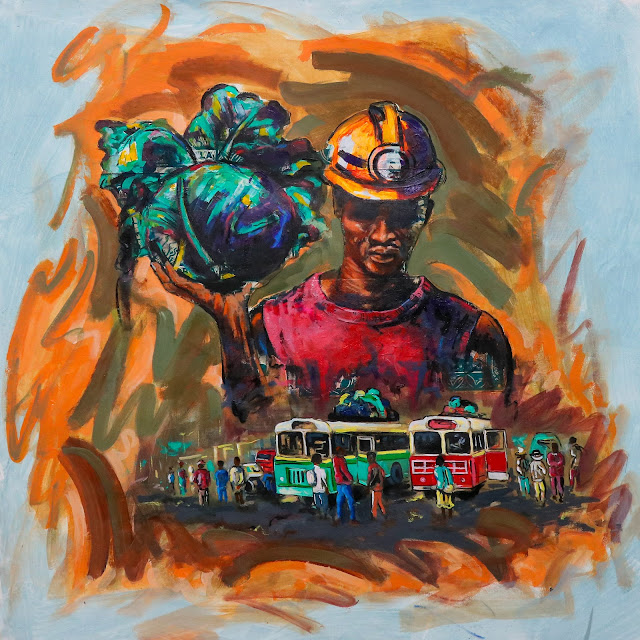
In a world where borders are becoming increasingly blurred by globalisation, migration remains one of the most defining issues of all time. For Zimbabwean-born artist Mandlenkosi Mavengere, this matter is more than just a global headline; it’s a deeply personal account he has masterfully woven into his art. Through his powerful depictions of migration, identity, and economic disparity, Mavengere provides a thought-provoking reflection on the forces that drive people to leave their homes to seek better opportunities.
Born in Bulawayo, Zimbabwe, Mavengere’s journey into the world of art began in South Africa, where he studied printmaking at the prestigious Artist Proof Studio. His time there and the subsequent internship at the William Kentridge studio laid the foundation for the unique style that has since become his signature.
Migration and the Search for Wealth
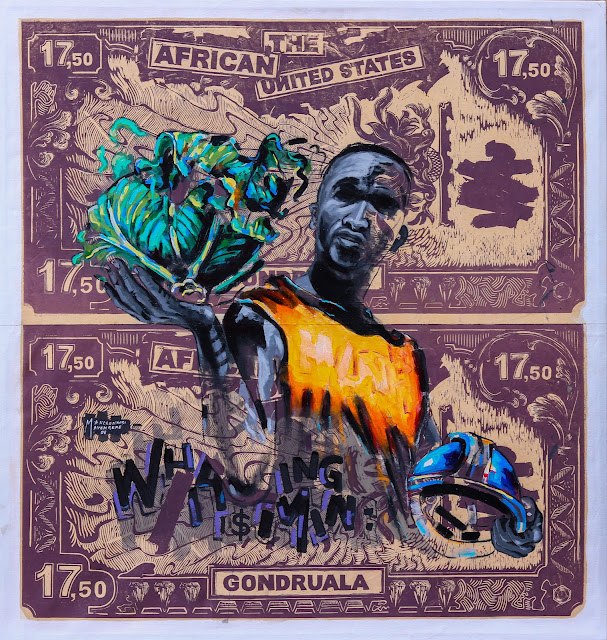
Central to his work is the fictitious currency, Gondruala, a backdrop in many of his pieces. This currency is his invention to symbolise the pursuit of wealth as the driving force behind migration. Also, it serves as a metaphor for the false promises that come with such endeavours.
The Gondruala currency reminds us that while wealth may be the goal for many migrants, the journey toward it often comes with significant personal compromises.
Using banknotes and currency imagery, Mavengere underscores the economic pressures that lead people to uproot their lives, while questioning the true cost of their pursuit.
The Economic Fabrication of Identity
Mavengere’s art is the exploration of migration as a socio-economic phenomenon. His artworks are a visual representation of the journeys undertaken by individuals who seek better fortunes in unfamiliar territories.
His paintings are, however, not merely about migration but also about the profound shifts in identity that occur when one leaves home in search of a new life. “I was confronted with the reality that my accent could land me in jail. It’s hard to grasp that the way I speak could be criminalised and determine my fate. The daunting task of having to carry a piece of paper to avoid deportation looms over me”.
Therefore, it is unsurprising that the most compelling aspect of Mavengere’s work is his depiction of migrants’ changing identities. The figures in his paintings, often portrayed with headgear or other symbols of their new occupations, reflect the transformation individuals undergo as they assimilate into new societies. “The identity crisis is egregious. You are forced to let go of your values and culture to blend in”, he says. These economically fabricated identities are, in essence, a survival mechanism for migrants, who must often leave behind much of who they are to fit into their new environment.
Mavengere’s linocut banknotes are a striking representation of this transformation. His intricate prints, with repeated patterns and detailed symbols, reflect the stereotypical identities imposed on migrants by economic systems. The use of fabric, canvas, and printed banknotes emphasises the transactional nature of migration—the exchange of one’s past identity for the hope of a better future.
Africa’s Wealth and the Global Economy
While Mavengere’s work is deeply rooted in the experiences of individual migrants, it also addresses broader questions about Africa’s role in the global economy. His Bank of Africa and African United States banknotes bring the continent’s resource wealth into focus, highlighting the ongoing exploitation of Africa’s natural resources by foreign powers. In these works, Mavengere introduces symbols of African minerals like gold and diamonds, alongside international currencies such as the Chinese yuan. These elements serve as a critique of the unequal trade relationships that continue to drain Africa’s resources while leaving its people in poverty.
The Gondruala currency, with its fictional value of $17.50, represents the socio-economic imbalance within Africa and between Africa and the rest of the world. It prompts viewers to ask, “What if?”—a reflection on the untapped potential of Africa’s wealth and the possibility of a more equitable future for its people.
Art as a Reflection of Hope and Endurance
Despite the economic and social challenges depicted in his work, Mavengere’s art is not without hope. He captures the endurance and resilience of African families and communities, portraying migration as both a journey of hardship and one of opportunity. His work reflects the dreams of migrants who leave home in search of a better life, as well as the endurance required to face the challenges that lie ahead.
His ability to convey the complexity of migration—its promise of wealth, its impact on identity, and the broader economic forces at play—makes his art not only visually compelling but also deeply relevant to our contemporary world. His intricate banknotes, with their layers of symbolism and meaning, invite viewers to reflect on their understanding of migration and the personal and economic sacrifices it entails.
As Mavengere continues to exhibit his work locally and internationally, his message remains clear: migration is a story of survival, ambition, and the search for identity in a world where economic disparity and opportunity are often two sides of the same coin.
Today, we celebrate Sabata-Mpho Mokae, an exceptional storyteller, academic, and translator whose contributions to literature irradiate the power of language and heritage. A composed gentleman with a peaceful demeanour, Mokae’s brilliance and humility are reflected in the way he often refers to himself as “the unknown novelist,” despite his significant impact on African literature. For him, writing in African languages is more than a nod to tradition; it’s an assertion of identity, depth, and artistic choice, far from mere preservation or a limitation of linguistic proficiency—a perspective Mokae views as profoundly shallow.
Mokae’s writing journey is rooted in Kimberley, a city he calls a “blessing that revealed itself in the course of time.” He reflects on Kimberley as a place of “beautiful people, clear skies and undying hope,” a city that has inspired writers for over a century, from Olive Schreiner to Sol Plaatje. Whether he someday departs or, like Plaatje, remains forever in Kimberley, he expresses gratitude for being able to live there and do what his heart desires—write.
With works like The Story of Sol T. Plaatje, Mokae shares not only Plaatje’s legacy but the spirit of African narratives that reach across time.
His Setswana novels; Ga ke Modisa, Dikeledi, and Moletlo wa Manong; have become literary treasures, with Dikeledi now prescribed at Sol Plaatje University and other institutions in the North West and Free State provinces. His stories serve as a bridge, connecting readers to their roots in meaningful and accessible ways.
Mokae’s scholarly work, done in collaboration with Professor Brian Willan, also brings to light African intellectual legacies, like the life and works of Sol Plaatje. Together, they edited Sol Plaatje’s Mhudi: History, Criticism, Celebration and Sol T Plaatje: A Life in Letters.
Through his translations of Gcina Mhlophe’s children’s stories into Setswana, Mokae extends his commitment to African languages, opening the door for young readers to explore the magic of African storytelling.
His accomplishments, which include the M-NET Literary Award for Best Setswana Novel and the Humanities and Social Sciences Award for Best Edited Volume, testify to his artistry. Yet, Mokae’s humility remains unwavering, keeping his focus on the stories and the community they serve rather than accolades.
As Mokae teaches Creative Writing in African Languages at Sol Plaatje University, his quiet genius inspires students to find their voice and share their stories. His influence goes beyond the classroom, stretching across generations of storytellers and strengthening the rich tapestry of African literature.
As we celebrate his birthday today, we honour his love for writing, his gratitude for Kimberley, and his dedication and love for African languages. May he continue to inspire with each new story, nurturing the heart and heritage of African literature.
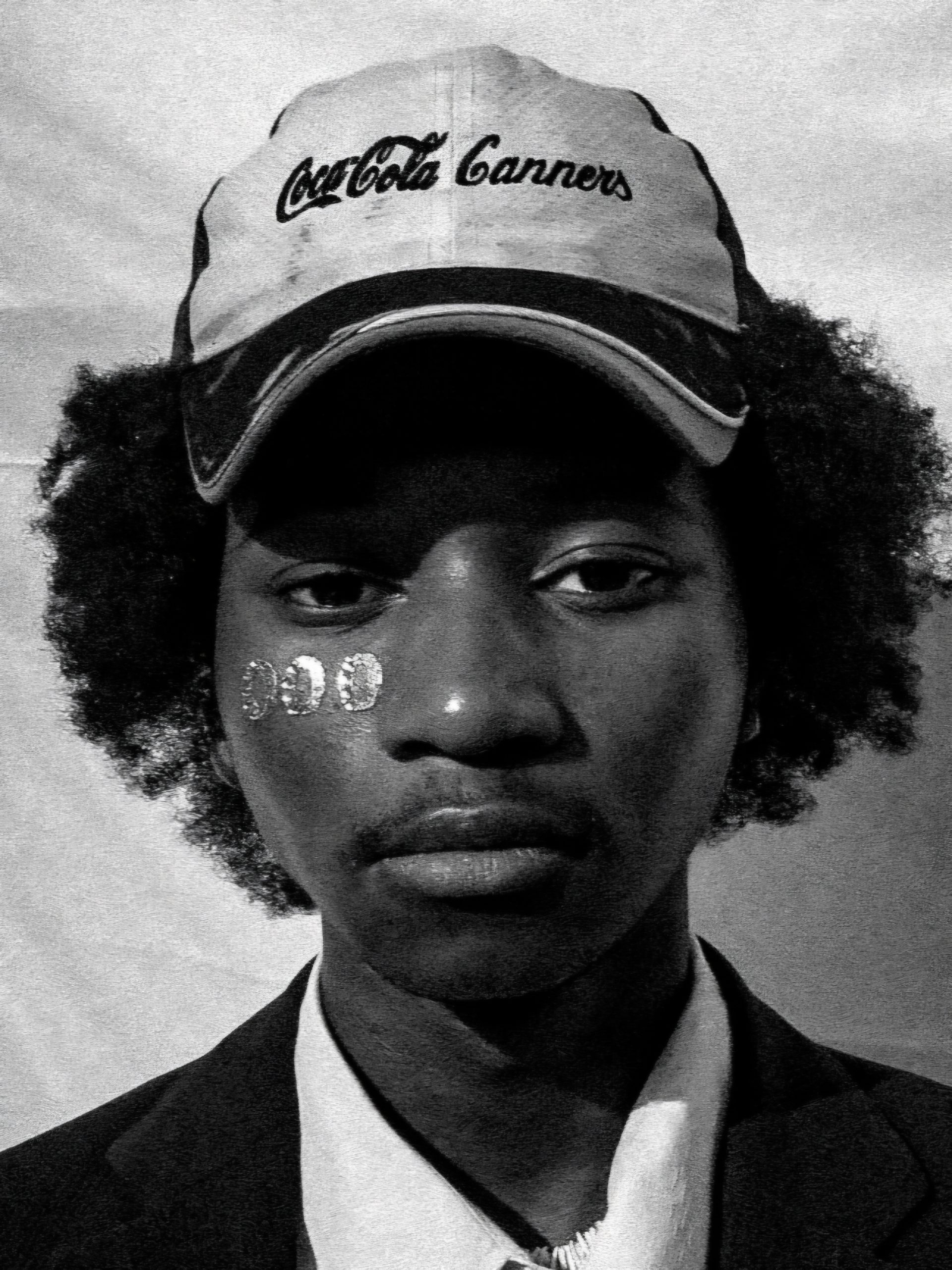
At a time when conversations around men’s mental health are becoming increasingly urgent, Khumo Ramaila’s practice offers something rare: a visual language for experiences that are often difficult to articulate. Rather than presenting easy resolutions, his work gives form to anxiety, self-doubt, responsibility, and resilience, opening a space where vulnerability can be witnessed without shame.
Born in 2001 and based in Johannesburg, South Africa, Ramaila is a multidisciplinary artist whose practice is rooted in printmaking while extending into drawing, digital media, and mixed-media processes. His work explores themes of identity, mental health, spirituality, personal morality, and self-confrontation, often drawing on symbolism, religious iconography, and narrative imagery to investigate the complexities of the human condition
His artistic journey began at the National School of the Arts, where he graduated in 2019 before continuing his studies at Artist Proof Studio, specialising in printmaking. There, under the mentorship of experienced printmakers, he developed a strong technical and conceptual foundation, refining a practice that combines traditional printmaking techniques with contemporary concerns and deeply personal storytelling.
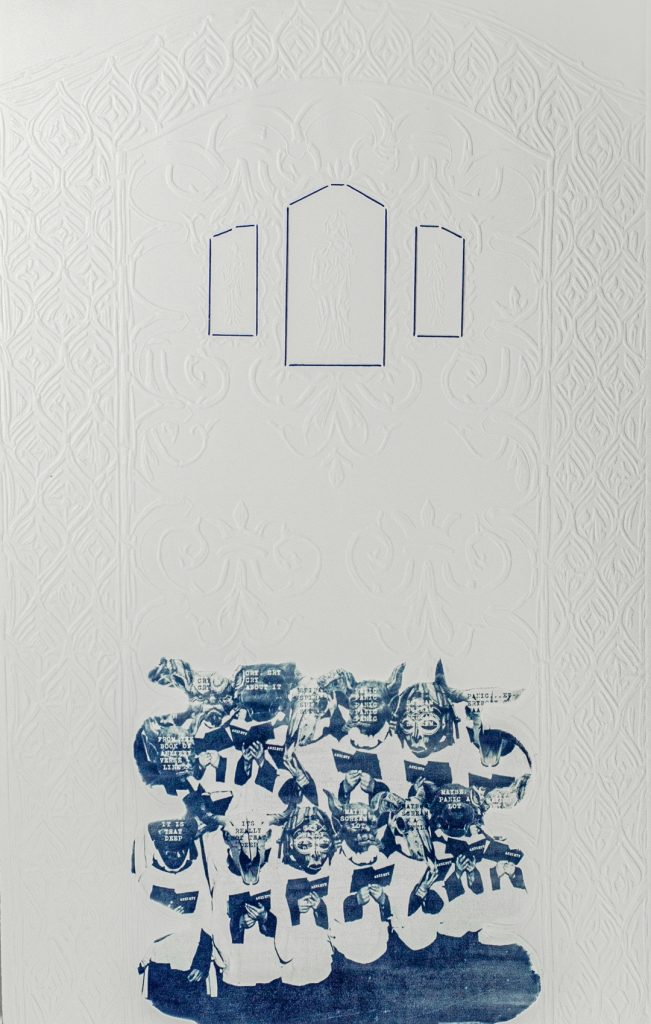
Anxiety Choir
Anxiety Choir by Khumo Ramaila
One of Ramaila’s most compelling visual metaphors emerges in Anxiety Choir. An artwork that transforms something traditionally associated with comfort and collective harmony into a manifestation of psychological overwhelm.
A choir, in its most familiar form, uplifts. Multiple voices merge into something beautiful and transcendent, creating a beautiful melody. Ramaila retains this structure but radically alters its emotional register. The harmony becomes a barrage, the voices close in, and the person at the centre feels trapped beneath the weight of competing thoughts.
“Anxiety is rarely a single voice. It arrives as an accumulation of thoughts, fears, expectations, and memories speaking over one another until your own voice becomes difficult to hear,” he explains.
“As the choral voices transcend, the same emotional high experienced by the listener is the metaphoric overwhelm that comes with anxiety”
This captures the physical sensation familiar to many who experience panic or heightened anxiety. The room appears to shrink, walls feel closer, and breathing becomes difficult. Importantly, the work acknowledges the spectrum on which anxiety exists.
“Anxiety expands and crowds the perceived space you have left to think, breathe, and move. “It manifests differently to different people. Some can continue moving through the noise, while others become immobilised by it. I wanted the work to recognise both realities.“
What Am I To Do?
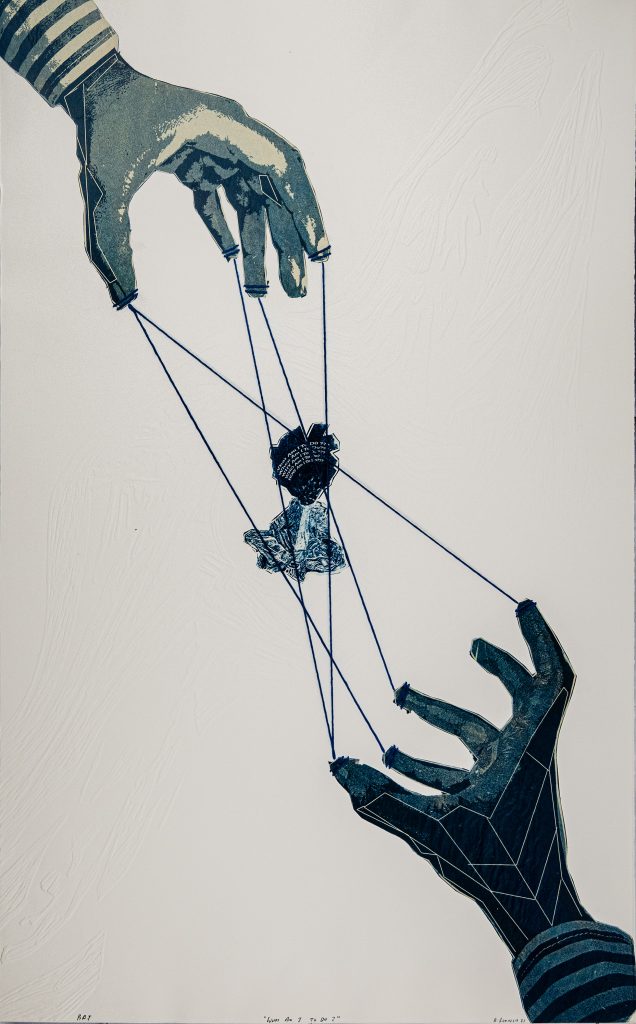
What am I to do? by Khumo Ramaila
While Anxiety Choir examines the sensory overwhelm of mental distress, What Am I To Do? turns inward to investigate the paralysis of responsibility and decision-making.
It captures the feeling of being stuck and constantly asking yourself, what am I to do? “The figure at the centre has a disfigured face to illustrate that mental state of questioning the who, what, when, where, and how; and wondering what the next step from here is”, explains Ramaila. The hands represent accountability and the role you play. As much as you may be asking, What am I to do?, it is still your responsibility to decide what you must do.
It acknowledges the weight of that realisation; even in moments of uncertainty and confusion, the responsibility of choosing how to move forward remains yours. The threads outline different options and ways to get yourself unstuck; however, their tangling challenges the idea of a linear way of thinking or a linear solution. It questions how to navigate all these threads, spaces, and possibilities to figure out what I am to do.
“If you look closely at the background, there’s an arch, which represents what should be a solid and stable structure; however, it is warping. This speaks to the experience of feeling stuck in a place where everything around you is moving. Like what typically happens in life, while you are trying to untangle the threads and figure out your next step, everything else continues to move with or without you”.
The Courage to Be Seen
Ramaila’s work lingers in the messiness of lived experience. It allows room for questioning, for vulnerability, and for the difficult emotions we are often encouraged to suppress. In doing so, it reminds us that uncertainty, fear, and grief are not failures of character, but fundamental parts of what it means to be human.
In a society where men are often taught that strength is synonymous with silence, Khumo Ramaila offers an alternative vision of masculinity rooted in honesty.
As Men’s Mental Wellness Month encourages us to reconsider what it means to care for the emotional lives of men, Ramaila’s work reminds us that vulnerability is not weakness but courage, and sometimes, the first step toward healing is simply finding a language for what hurts.
To view more of Khumo Ramaila’s art, visit our Artistry Alcove page for the complete gallery.